
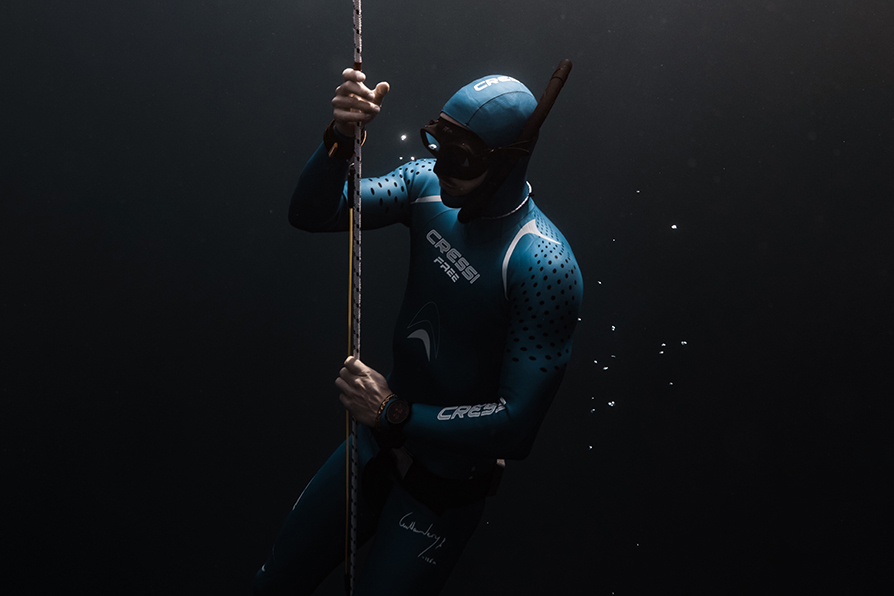
There’s a moment in the water that every freediver knows.
A few seconds after you submerge, something changes. Your heart slows down. Your mind becomes quiet. The urge to breathe that felt so strong at the surface fades away—or at least, it waits. Suddenly, you realise you’re in an environment that isn’t meant for you—without air, under pressure, surrounded by blue—and yet something inside you knows exactly what to do.
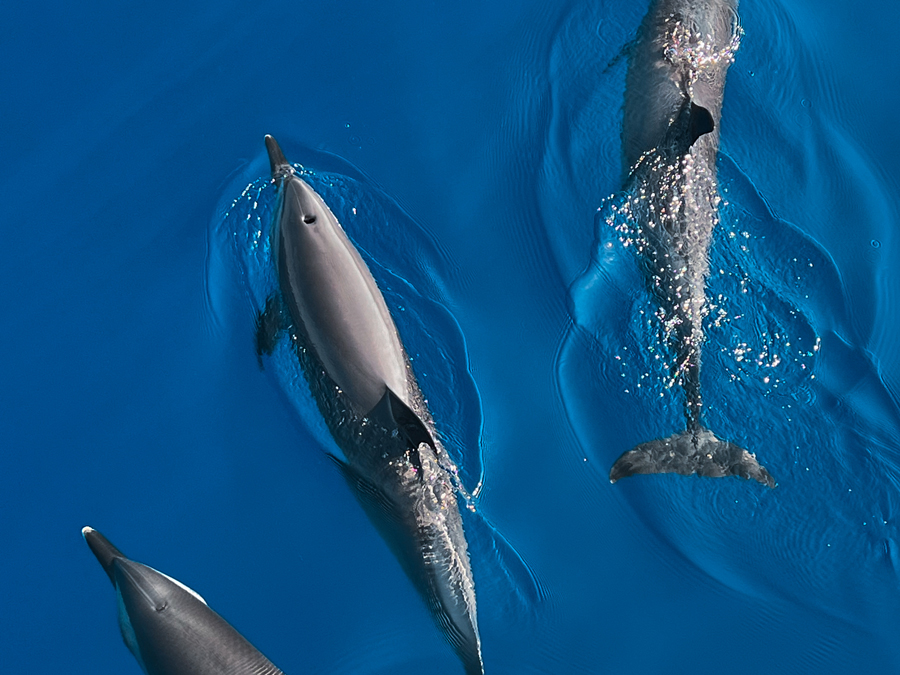
It isn’t magic. It isn’t a special gift that some people have and others don’t. It’s biology. It’s evolution. It’s a mechanism that’s been built into your body since long before you were born, one that you share with whales, dolphins, seals, and every mammal that, at some point in evolutionary history, returned to the sea.
It’s called the mammalian dive reflex. And quite literally, it’s a superpower.
We’re all aquatic mammals (even if we’ve forgotten)
To understand the mammalian dive reflex, we need to take a step back and remember something that life on land has made us forget: mammals came from the water.
Around 375 million years ago, the first vertebrates crawled out of the oceans and began life on land. But that’s not where the story truly begins—or, in many ways, where it ends. Our earliest ancestors were aquatic organisms. Water isn’t an alien environment to our biology. It’s where we come from. And although we’ve spent millions of years living on land, our bodies haven’t completely forgotten their origins.
Perhaps the clearest evidence is found before we’re even born. We spend our first nine months floating in amniotic fluid, breathing no air at all, receiving oxygen through the umbilical cord. Human fetuses already display active diving responses in the womb. Newborn babies, when gently submerged in water, don’t instinctively gasp for air. They hold their breath, kick, and search for the surface. The body knows.
Then we grow up. We learn to walk, to speak, to live on land. That ancient knowledge falls asleep—but it never disappears.
Freediving, among many other things, is the art of waking it up.
What Exactly Is the Mammalian Dive Reflex?
The mammalian dive reflex—also known as the diving response—is a coordinated series of physiological reactions that activates when the body comes into contact with water, especially when the face is submerged.
It’s not something you choose to do. It’s automatic, involuntary, and present in every mammal without exception. In whales, it’s taken to extraordinary extremes. In seals. And in you.
The four main responses are:
1. Bradycardia: a heart that knows when to slow down
The moment your face enters the water—even before you hold your breath—your heart begins to slow. In people with no training, heart rate typically drops by around 10–25%. In experienced freedivers, reductions of more than 50% are common. In marine mammals such as whales and seals, heart rate can fall to as little as 4–6 beats per minute during deep dives.
Why? Because a slower heart consumes less oxygen. It’s simple efficiency. When oxygen is limited, the body reduces the workload of one of its most demanding organs.
That deep sense of calm many freedivers describe after submerging isn’t imagination or suggestion. It’s your heart responding to water exactly as it has for millions of years.
2. Peripheral vasoconstriction: blood goes where it’s needed most
At the same time that the heart slows down, the blood vessels in your hands, feet, arms and legs begin to constrict. Blood is redirected away from the extremities and concentrated around the body’s core: the heart, lungs and brain—the organs that need oxygen the most to keep you alive and conscious.
It’s a perfectly organised hierarchy of priorities. The muscles in your legs can cope for a while with reduced circulation.Your brain can’t. Your body knows the difference, and acts accordingly.
3. Blood shift: why your lungs don’t collapse
As you descend, pressure increases and your lungs become compressed. At 30 metres, your lungs occupy only about a quarter of the volume they had at the surface. At 100 metres, in theory, a human lung should collapse.
But it doesn’t. Why?
The answer lies in what’s known as blood shift. As external pressure compresses the chest, blood plasma from the pulmonary circulation moves into the alveoli—the tiny air sacs inside the lungs. The fluid fills the space previously occupied by air, acting as an incompressible cushion that prevents the lungs from collapsing under pressure.
It’s the same mechanism that allows Weddell seals to dive to 600 metres, southern elephant seals to reach depths of 1,500 metres, and competitive freedivers to descend beyond 90 metres. And it’s a mechanism you have too. One that activates automatically, without you having to consciously do anything.
4. Spleen contraction: your hidden oxygen reserve
The spleen acts as a reservoir for red blood cells.Under normal conditions, a proportion of these cells remains stored there, outside the main circulation. When the mammalian dive reflex is activated, the spleen contracts and releases this reserve into the bloodstream.
More red blood cells mean more haemoglobin.More haemoglobin means a greater capacity to transport oxygen.Within seconds, your body increases its ability to make the most of the oxygen it already has available.
Studies of competitive freedivers show that trained divers often have significantly larger spleens than sedentary individuals, and that their spleens contract more quickly and more powerfully during a dive.Give your body the chance to practise this reflex, and it adapts.It becomes better at it.


The reflex can be trained — and strengthened
Perhaps the most remarkable thing about the mammalian dive reflex is this: It isn’t fixed. Everyone has it, but it can be developed. People who practise freediving regularly show a deeper bradycardic response, stronger spleen contractions and a more efficient blood shift than people with no training. Not because they’re genetically different. Simply because they’ve given their bodies the opportunity to remember what they already know how to do. Every calm, relaxed dive is a form of training.
Each time you enter the water without fighting it, each time you descend with awareness instead of tension, you’re telling your body: “I know where we are. You can do what you were designed to do.”
And your body responds.
What freediving really teaches you
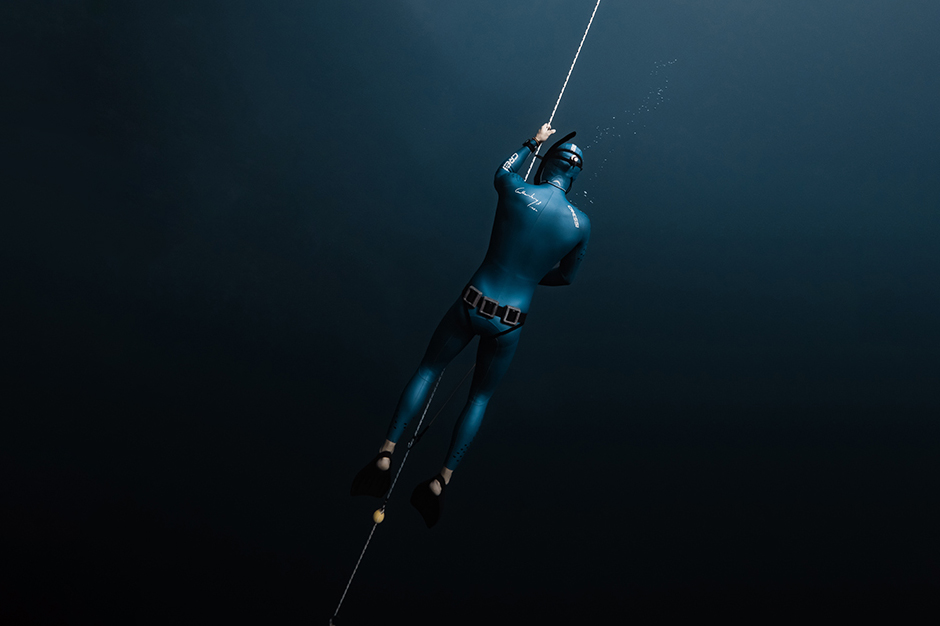
There’s a sentence that’s stayed with me ever since I started freediving: The sea doesn’t teach you how to freedive. Freediving teaches you how to listen to your body.
The mammalian dive reflex is perhaps the clearest proof that our bodies know more than we give them credit for. That they carry memories older than our own consciousness. That somewhere within our biology lies an ancient intelligence, refined over millions of years in the water.
Freediving isn’t about forcing your body to do something unnatural. It’s exactly the opposite. It’s about allowing your body to do what it has spent millions of years evolving to do. Removing the fear. Letting go of the tension. Quieting the thoughts that get in the way. And allowing that ancient mechanism to do its job.
That’s what I teach at Makara. Not how to hold your breath. But how to trust what’s already there.
Ready to awaken your mammalian dive reflex? The AIDA 2 course is the perfect place to begin. Get in touch and we’ll help you take your first breath into freediving.
FAQs
Does the mammalian dive reflex activate even if I don't practise freediving?
Yes. The mammalian dive reflex is an involuntary response that occurs in every mammal simply when the face comes into contact with water. It doesn’t require any training to activate—the only thing training does is make the response deeper and more efficient.
Why does cold water trigger a stronger dive reflex than warm water?
The cold receptors in the face are particularly sensitive and play an important role in triggering the response. Cold water on the face activates the dive reflex more quickly and more intensely than warm water.
Is the mammalian dive reflex dangerous for the heart?
For people with a healthy heart, no. The bradycardia produced by the mammalian dive reflex is a normal physiological response and is considered safe. If you have any heart condition, you should consult your doctor before practising freediving.
Do babies have a stronger dive reflex than adults?
Newborn babies display the dive reflex very strongly—it’s an instinctive response during the first months of life. As we grow up and spend our lives on land, the response becomes less pronounced if it isn’t regularly stimulated. But it never disappears.