
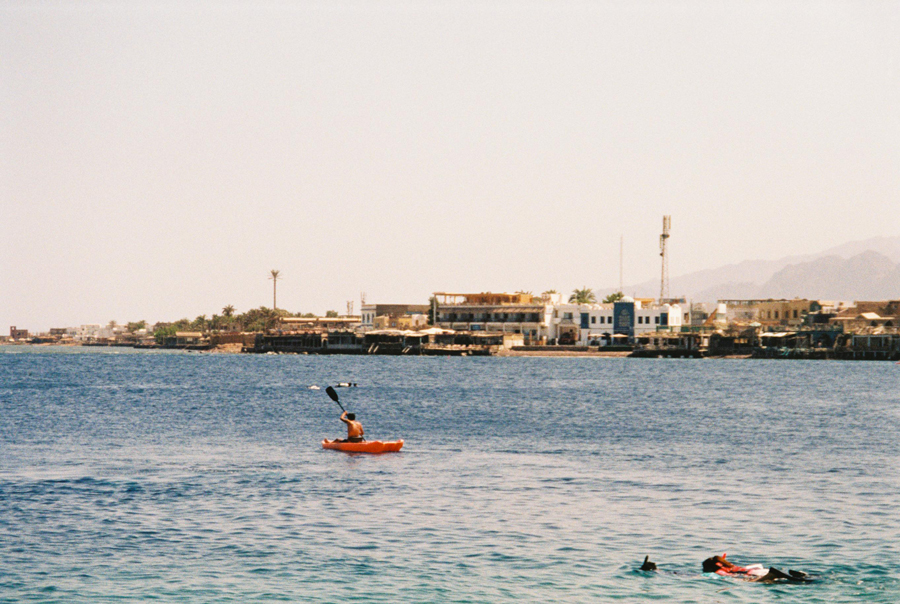
A Red Sea gem in Egypt’s Sinai peninsula
Tourism in the Sinai Peninsula has largely developed around the city of Sharm el-Sheikh, known for its all-inclusive resorts, nightlife, and casinos. But Dahab has emerged as a laid-back alternative for those looking to escape the crowds of Sharm el-Sheikh or Hurghada — offering world-class dives at iconic sites like the Blue Hole and The Canyon.
Is Diving in Dahab Dangerous? Despite the Blue Hole’s global reputation—often misunderstood—Dahab is no more dangerous than any other dive destination. In fact, it’s as safe as anywhere else in the world, with dive sites suited to all experience levels. We break it all down for you in this post.
Next, we’ll show you the must-dive sites in Dahab and why the Sinai is the perfect Red Sea alternative if you’re looking to explore without joining a liveaboard.
Scuba diving in Dahab
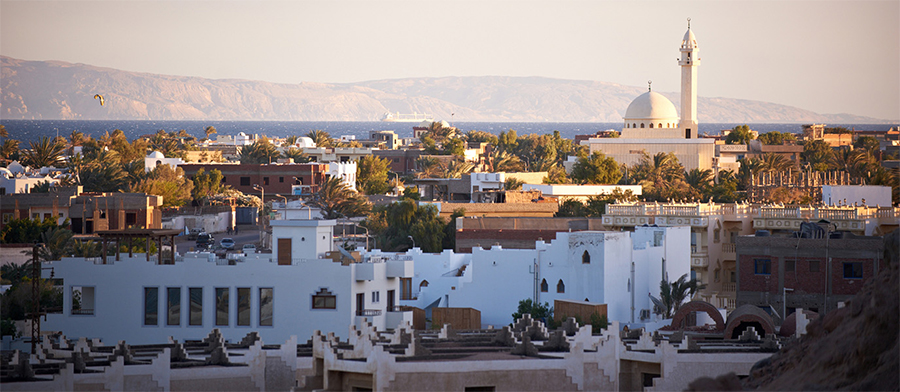
About 80 km north of Sharm El-Sheikh lies Dahab, a former Bedouin village nestled between the Red Sea and the Sinai Mountains. Just fifty years ago, it was home to only a few dozen Bedouin families.
Today, Dahab exudes a bohemian vibe and a laid-back atmosphere that stands in stark contrast to the fast-paced, modern feel of Sharm El-Sheikh. It’s a place with a free spirit and a more open, welcoming community than many other destinations in Egypt. If you’re curious about what tourism in Dahab looks like today, check out our full guide.
Most of Dahab’s dive sites are accessible directly from the shore, making diving here not only easier but also more affordable—no need to rely on a boat every day. Divers usually complete two morning dives, with night dives available at sunset—an experience we highly recommend.
After setting up your gear at the dive center, a pick-up truck will take you to the day’s chosen sites. Among them are two world-renowned spots: the Blue Hole and The Canyon.
Dahab’s popularity among divers has grown so much that it’s now a key destination for technical diving and freediving training, thanks to its easy access to depth. It’s also a hotspot for water sports like kitesurfing and windsurfing—the colorful kites have even become part of Dahab’s iconic skyline.
Depth:
5 – 40 meters
Visibility:
20 – 40 meters
Water Temperature:
21º till 29ºC
Currents:
minimum
Seasons:
all year
Levels:
all
Dahab offers access to a wide range of local dive sites just a short drive away, and even the more remote spots are reachable with a full-day trip. There are around 15 dive sites within 15–20 minutes by road, all boasting excellent visibility. The most popular ones include the Blue Hole, The Canyon, Eel Garden, Golden Blocks, Coral Garden, The Caves, and The Islands. Most dives are shore entries, accessed through designated entry points that allow you to get in without damaging the reef.
Each dive site has its own small local restaurants, perfect for surface intervals and grabbing a bite to eat between dives. There’s nothing better than coming out of the water and finding lunch already waiting at the table. The food is simple but tasty, with options like fresh juices, coffee, and of course, a traditional Bedouin tea to round off your surface break.
Diving Around Dahab
If you venture a bit farther from Dahab’s main diving hub, you’ll discover two breathtaking dive areas: Gabr El Bint—the only dive sites in Dahab accessible by boat—and the Ras Abu Galum National Park. Reaching these remote spots requires a full-day excursion, typically running from 7 AM to 4 PM, with the option to do two or three dives.
Due to limited availability—whether because the group doesn’t fill up or no boats are scheduled—we highly recommend booking in advance, as these trips don’t run every day.
 Gabr el Bint
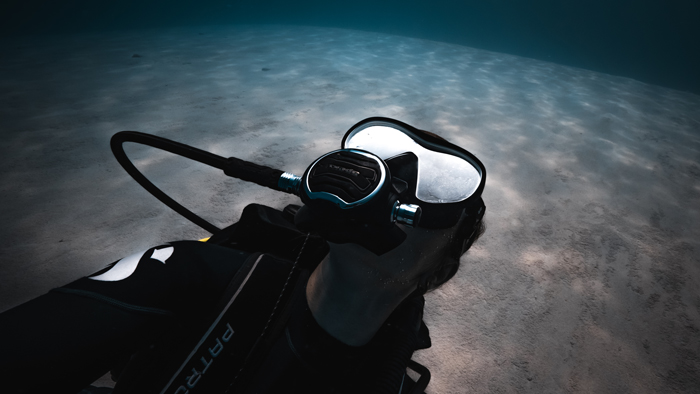
One of the best-preserved reefs in the area, featuring an incredible variety of gorgonian gardens and table corals. While it’s accessible only by boat, the dive is absolutely worth it. If you’re lucky, on the return trip to the port, you might even get a visit from a pod of dolphins greeting you.
Ras Abu Galoum
Located north of Dahab, this area is a protected zone within the Sinai National Park, offering excellent diving conditions. The Marine Reserve is well-preserved and remains largely untouched by the mass tourism that dominates other parts of the Red Sea, like Hurghada and Sharm El-Sheikh. It’s a full-day experience, as in addition to diving, you’ll have the opportunity to visit the area and explore authentic Bedouin settlements.
Scuba diving in the Sinai peninsula
But the adventure doesn’t end there; from Dahab, you can also access some of the greatest treasures just a stone’s throw away, including Tiran Island, Ras Mohamed National Park, and one of the most famous wrecks in the world, the SS Thistlegorm.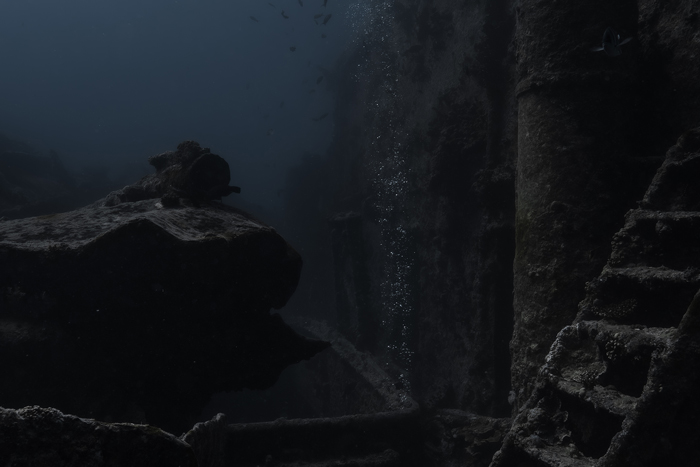
SS Thistlegorm
The famous SS Thistlegorm wreck is a 128-meter-long vessel sunk in 1941 and discovered by Jacques Cousteau in the 1950s. It’s one of the world’s best wreck dives, with tanks, motorcycles, trucks, cannons, shells, and even two train locomotives still visible. Learn more about this iconic wreck dive here.
Important: To dive the SS Thistlegorm, you must have an Advanced certification (or equivalent) and at least 20 logged dives. We recommend using Nitrox for this dive.
Ras Mohamed National Park
Ras Mohamed National Park, located at the southern tip of the Sinai Peninsula, is a natural sanctuary that captivates both above and below the water. Known as one of the Red Sea’s gems and one of Egypt’s most important nature reserves since 1983, this park offers exceptional diving among reefs that host 220 species of coral. It’s also a must-visit for biodiversity enthusiasts.
Surrounded by an arid, mountainous landscape of rocky cliffs, lagoons, and mangroves that stretch like an oasis across the sands, the stark desert scenery contrasts dramatically with the vibrant marine life. Ras Mohamed is a true ecological haven where the desert meets the sea, creating a unique ecosystem. You can choose to dive by boat or from the shore—contact us, and we’ll tailor the perfect plan for you!
Tiran Strait
The Tiran Strait lies at the mouth of the Gulf of Aqaba, bordered to the west by the Sinai coast and to the east by Tiran Island, and it is only 5 kilometers wide. In the middle of this channel, you’ll find four stunning coral reefs that are the main attractions for most boats on the northern Red Sea route: Jackson Reef, Woodhouse Reef, Thomas Reef, and Gordon Reef.
The strong currents flowing through the strait are rich in plankton and other nutrients, which nourish the corals, allowing them to thrive and grow exceptionally. Here, you’ll encounter some of the most beautiful, healthy, and spectacular coral gardens in the entire Red Sea.
The pristine condition of these reefs provides an ideal habitat for a wide range of small and medium-sized fish in vibrant colors, which also attracts larger pelagic species like barracudas, jacks, eagle rays, tuna, pilot whales, turtles, and especially reef sharks.

When is the best time to dive in Dahab?
Yes, you absolutely can. The water conditions are ideal throughout the year, but it’s worth noting that during the winter months (December to February), the winds tend to be stronger and cooler.
We recommend visiting the Sinai Peninsula in May-June or between September-November if you want to avoid the most extreme temperatures. While it’s true that during the hotter months, the breeze in Dahab makes it very manageable—especially if you’re diving—it’s always nice to avoid the peak heat when possible.
Temperatures can fluctuate quite a bit depending on the time of year. Summer highs can reach up to 40°C, while winter lows can drop to around 10-12°C. Water temperature also varies throughout the year, with the highest peak at 29°C during July and August. By September, it begins to gradually cool, ranging between 28°C and 26°C until November, and dropping to around 21°C in January.
Convinced yet? Whether you’re an experienced diver or new to the underwater world, Dahab is the place for you. We’ve been living and working in Dahab for over five years, and we’re thrilled to have created the first spanish-speaking diving community in the area. So, if you’re thinking of coming to Dahab to dive, get in touch—we’ll help you plan your trip!