
Dahab doesn’t have the marketing budget of the Maldives or the brand recognition of the Great Barrier Reef. What it has instead is better dive sites, warmer water than the Mediterranean, visibility that regularly exceeds 30 metres, and a price tag that makes most other world-class diving destinations look overpriced. If you’ve been on the fence about whether Dahab is worth the trip, this guide will settle it.
We’re Makara — a diving and freediving school in Dahab, leaded by passionate people. We’ve been diving these waters every day for years. This is what we know.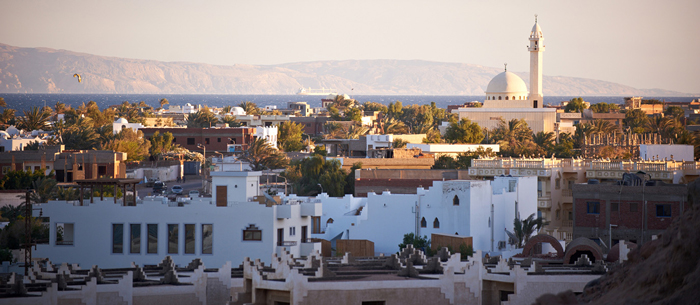
Why Dahab for scuba diving
The Red Sea is one of the most biodiverse marine ecosystems on the planet. Semi-enclosed, fed by no rivers, with high salinity and warm water year-round, it has evolved in relative isolation over millions of years — producing concentrations of marine life that few seas can match.
Dahab sits on the southern tip of the Sinai Peninsula, on the Egyptian side of the Red Sea. It’s not the biggest resort town in Egypt — that’s Hurghada. It’s not the most famous — that’s Sharm el-Sheikh. It’s the one where serious divers go.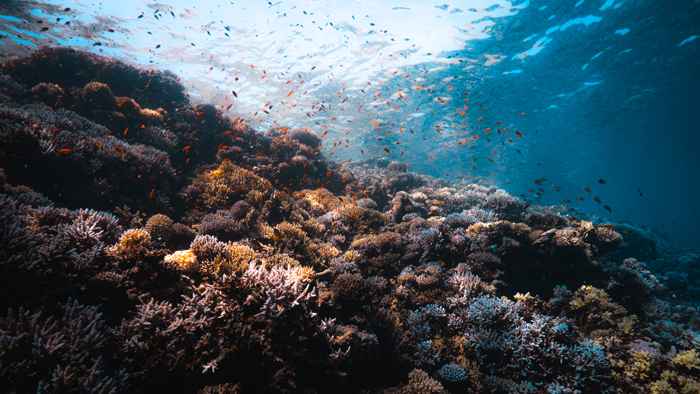
What Dahab has that others don’t
Shore diving from most sites — no boat needed, which means more flexibility and less waiting around. The dive sites are consistently excellent within 10 minutes of town. Groups are small. The diving community is serious. And the town itself hasn’t been swallowed by resort culture, which means you spend your surface intervals in a place that still feels like somewhere, not a theme park.
The dive sites
- The Blue Hole: the most famous dive site in Dahab, and one of the most photographed in the world. A cylindrical sinkhole in the reef dropping vertically past 100 metres, ringed by some of the healthiest coral in the Red Sea. Recreational divers enter through the Saddle — the outer reef passage — and explore the wall down to 30 metres. Visibility here is almost absurdly good: 35–40 metres is normal. The Blue Hole has a reputation attached to it — several fatalities over the years, all linked to technical divers attempting to cross The Arch (a passage at 55 metres) without adequate preparation. Recreational scuba diving on the wall is completely different and one of the safest dives in Dahab. Don’t let the reputation put you off.
- The Canyon: a crack in the reef starting at 6 metres and spiralling down to 52 metres. You enter the fissure between orange coral walls, descend through a narrow chimney in partial darkness, and emerge through the outer reef wall into open water. One of the most dramatic dive profiles anywhere in the Red Sea. Recommended for Advanced Open Water divers and above.
- Lighthouse: Dahab’s most accessible dive site, metres from the town beach. Entry and exit over a shallow reef shelf, diving on a gently sloping wall with exceptional marine life density: turtles, moray eels, octopus, pufferfish, Napoleon wrasse, and more reef fish than you can identify in one dive. Famous Dahab’s underwater elephant. Perfect for beginners and for underwater photographers. Suitable for all levels.
- Islands: coral heads rising from a sandy bottom, creating swim-throughs and overhangs. Strong on big-animal encounters: barracuda, Napoleon wrasse, turtles, octopuses. Open Water level and above.
- Eel Garden: a sandy slope where hundreds of garden eels sway from their burrows in near-perfect synchrony. One of those dives that sounds underwhelming on paper and turns out to be completely mesmerising in person. Stingrays and flatfish share the sand; the occasional turtle passes overhead. All levels.
Marine life: what to expect
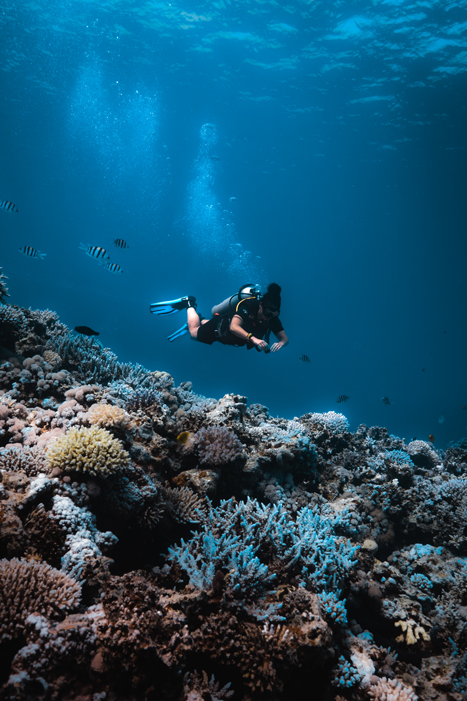
The Red Sea’s biodiversity is its strongest selling point. In Dahab, even on the most casual dive, you’re likely to encounter green and hawksbill turtles (not occasional — regular), moray eels (giant and snowflake), Napoleon wrasse, various ray species, octopus, nudibranchs, lionfish, scorpionfish, and an almost overwhelming density of reef fish.
The coral itself is in significantly better condition than comparable destinations that have suffered bleaching events. High salinity and relatively stable temperatures have protected much of the Dahab reef from the worst effects of warming.
Courses available at Makara
PADI Open Water Diver:
The Open Water course is the entry point. 3 days, certifies you to 18 metres worldwide. Theory (available as PADI eLearning before you arrive), confined water skills, and four open water dives in Dahab’s best sites. Taught in English and Spanish.
PADI Advanced Open Water:
The Advanced Open Water course is for certified divers who want to reach 30 metres and build skills: deep diving, underwater navigation, night diving and three additional speciality dives of your choice. 2 days.
Nitrox Speciality:
Oxygen-enriched air akaNitrox for longer bottom times and shorter surface intervals. 1 day, no depth requirement.
Fun dives:
Already certified? Join our guided dive groups to explore Dahab’s sites without a course. Small groups, experienced guides, flexible scheduling.
When to go
- Spring (March–May): water 22–25°C, exceptional visibility, manageable crowds. Many divers’ favourite season.
- Summer (June–August): water up to 29°C — warm and comfortable. More tourist traffic than other seasons (though Dahab never feels truly crowded). Surface temperatures 35–38°C, which makes surface intervals hot, but perfectly manageable.
- Autumn (September–November): arguably the best season. Water still summer-warm (26–27°C in September), visibility at its annual peak, and significantly fewer people than August. Highly recommended.
- Winter (December–February): water cools to 20–22°C — manageable with a 5mm suit. Very quiet, good prices, and the town takes on a different, more local feel. Good for those who want to dive without any tourist infrastructure around them.
 How to get there
Fly to Sharm el-Sheikh (SHA): direct flights available from most European airports, with more frequency in high season. From Sharm airport, private taxi $35–40. Journey time: 60–90 minutes.
Visa: on arrival at the airport, 25 USD cash. Have the money ready before you join the immigration queue. Not necessary if you are staying just in Sinai for less than 15 days.
Alternatively, arrive via Cairo (domestic flight or bus) or cross by ferry from Aqaba in Jordan if you’re combining with a wider Middle East trip.
Practical tips before you go
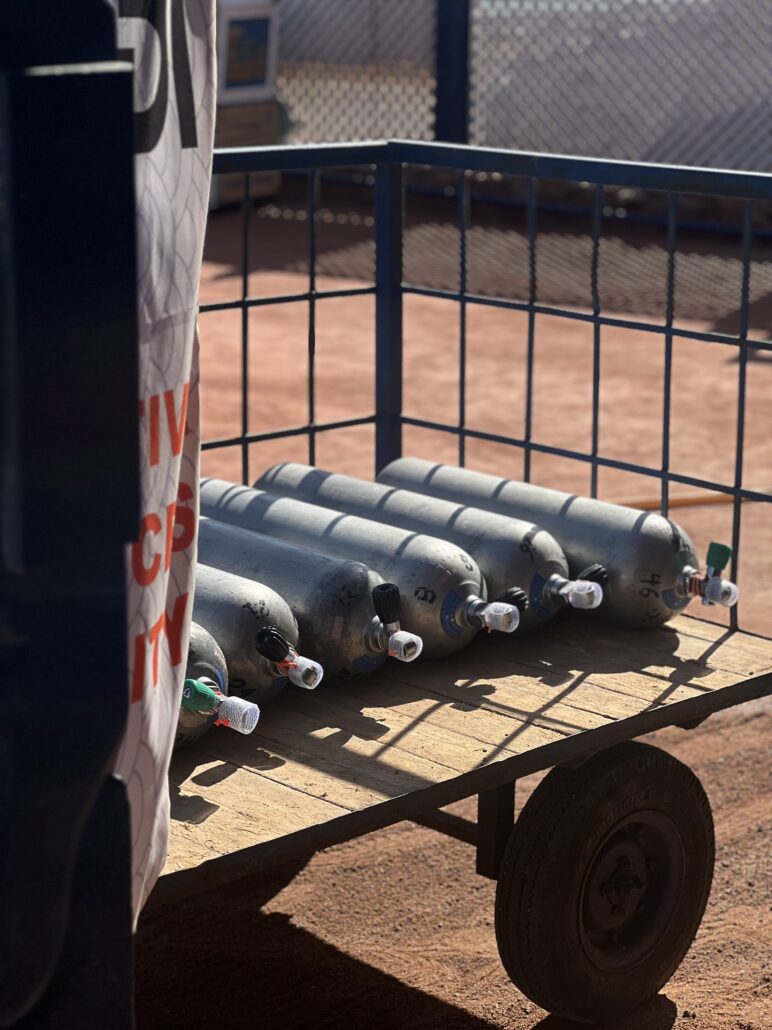
- Dive insurance: standard travel insurance almost never covers scuba diving accidents. A DAN Europe policy starts at around €71/year and covers decompression illness, barotrauma and emergency evacuation to a hyperbaric chamber. Sharm el-Sheikh has the nearest chamber to Dahab — don’t skip the insurance.
- Equipment: full equipment available for hire at Makara. If you have your own mask, bring it — it’s the most personal piece of kit and fit matters. Everything else — regulator, BCD, wetsuit, fins, computer — can be hired without compromise.
- Logbook: carry yours. Any serious dive centre in Dahab will ask for proof of certification and dive experience before letting you on advanced sites.
- Money: Egyptian pounds for daily life. Have USD cash for the visa. ATMs in Dahab sometimes run dry — withdraw at the exchange shop in Dahab to be safe, either USD or EUR.
If you’re planning a diving trip to Dahab, check our diving packages and guided experiences.