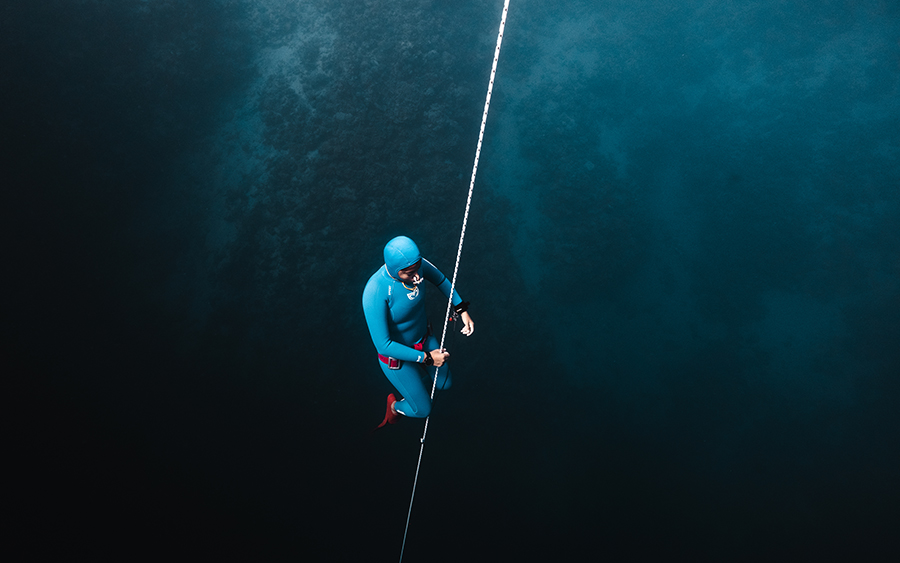
There are destinations that everyone in the freediving world knows, and then there are the ones they actually go to. Dahab is both. A small town on the southern tip of the Sinai Peninsula that has, over the past few decades, quietly become the global capital of freediving — not through marketing, but through the kind of word-of-mouth that only happens when a place genuinely delivers.
If you’re looking for somewhere to do your first AIDA course, to train seriously, or simply to understand what freediving really feels like when the conditions are right — this is what you need to know about Dahab.
What makes Dahab exceptional for freediving
The water conditions 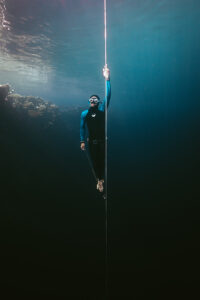
The Red Sea in Dahab checks every box that matters for freediving training. Salinity is higher than the Mediterranean or the Atlantic, which means greater buoyancy and a softer, more gradual neutral point during descent — something that makes learning significantly easier, especially in the early dives when you’re still figuring out weighting.
Water temperature ranges from 20°C in winter to 29°C in summer. Warm enough for long sessions without draining energy to thermoregulation. Cool enough to stay alert and focused.
Visibility is, by most standards, absurd. On a normal day in Dahab you can see 25–30 metres. On a good day, 40. For freediving, visibility isn’t just aesthetic — it’s safety. Seeing your safety diver, seeing the line, seeing the reef around you as you descend: all of it matters, and Dahab rarely lets you down.
The Blue Hole
No honest account of freediving in Dahab leaves out the Blue Hole. A cylindrical sinkhole in the reef, roughly 60 metres across, dropping vertically past 100 metres into open water. Zero current. Perfect stillness. A descent line dropped from the platform and a column of blue that simply disappears below you.For advanced freedivers, it’s one of the best training venues on the planet, full stop.
The Blue Hole is 10 minutes from the centre of Dahab by road. You walk in from the reef platform. No boat, no queue, no schedule. You arrive, you set the line, you dive.
No current
This cannot be overstated. Freediving in current is a completely different — and significantly harder — experience than freediving in still water. In Dahab’s main training sites, there is effectively no current. Descents are predictable. Ascents are controlled. Safety divers can hold positions. The line stays straight.
For learning, this matters enormously. When the environment is calm, the mind can focus on technique. When technique is the focus, progress is faster.
The community
Dahab has something that very few diving destinations have: a real, permanent freediving community. Instructors from around the world who have chosen Dahab as their base. Competitive athletes who train here for months each year. Students who arrive for a course and stay for a season. That community creates a learning environment that no resort can replicate: there is always someone to dive with, always someone with more experience nearby, always the sense that freediving is taken seriously here.
The mental environment
Freediving is as much mental as physical. Learning to manage the urge to breathe, to release control, to trust the body — these things don’t happen well in noisy, crowded, rushed environments. Dahab has a pace that makes them easier. Desert light. The sound of the Red Sea. Evenings on a terrace watching the Sinai mountains change colour. The town has a quality of stillness that extends into the water.
AIDA courses at Makara: in English, from scratch
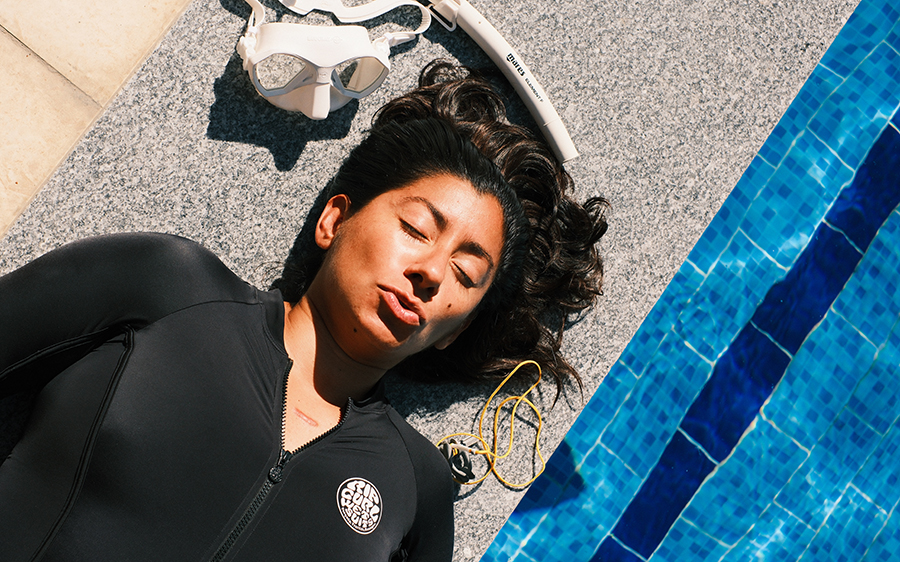
We are Makara — the first Spanish-speaking school in Dahab, and we also teach all our courses fully in English. Irina, our freediving instructor, is AIDA certified and SHARE Equalization certified instructor. Koldo runs our scuba diving programm up to DMT. Between us, every course is taught with small groups and full attention to each student.
- AIDA 2 — The starting point
The AIDA 2 is the first internationally recognised freediving certification. No prior freediving or diving experience required — just comfort in the water and good general health.
Over two days and a half you’ll cover static and dynamic apnea, the physiology of breath-hold diving, equalization technique, safety protocols and buddy rescue — and you’ll make your certification dives up to 20 metres in open water.
- AIDA 3 — The next level
For freedivers who already have the AIDA 2 and want to go deeper. The AIDA 3 works to 30 metres, introduces advanced equalization and more complex rescue scenarios.
Already certified and wanting to improve specific areas — depth, equalization, relaxation, static time? We design personalised training plans built around what you actually need to work on, not a generic programme.
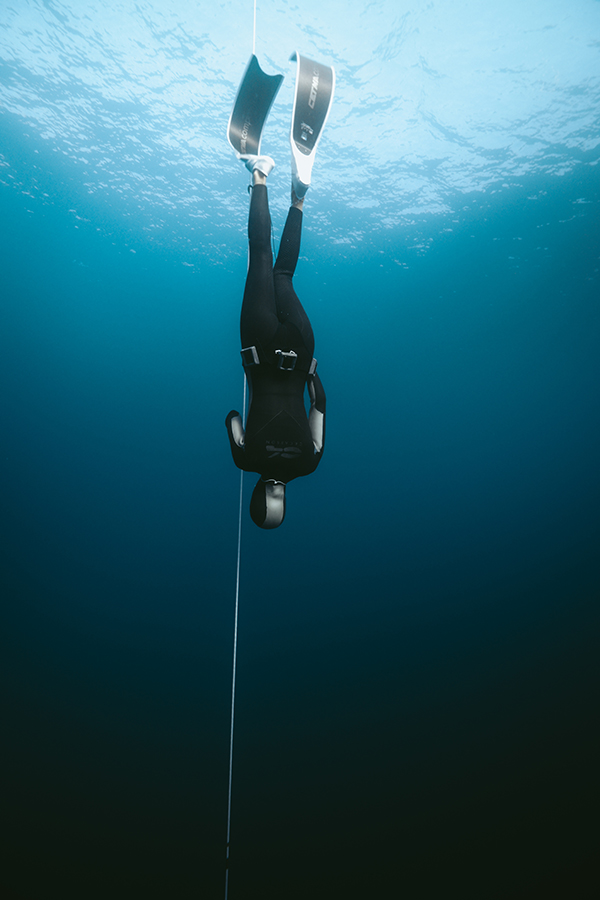
Who freediving in Dahab is for
The honest answer is: almost anyone who is comfortable in the water and curious enough to try.
You don’t need to hold your breath for long. You don’t need to be a strong swimmer. You don’t need to have dived before. The AIDA 2 starts where you are, and the conditions in Dahab make the learning curve significantly gentler than in most other places.
We’ve taught freediving to people in their fifties who had never put their face underwater. To competitive swimmers who were terrified of depth. To scuba divers who wanted to understand what it felt like without the tank. To people going through difficult periods in their lives who found something in the silence of the water they couldn’t find anywhere else.
Irina says it simply: she believes everyone has their place on the path of freediving. Dahab is a particularly good place to find it.
Practical information
When to go: Dahab works year-round. Best conditions for freediving: September–November (water still warm from summer, visibility at its annual peak, fewer tourists than August) and March–May (excellent visibility, comfortable water, quiet).
How to get there: Fly to Sharm el-Sheikh (SHA). Direct flights available from most European airports, especially in high season. Taxi from the airport to Dahab: approximately 60–90 minutes, around €40 per trip.
Visa: 30 USD cash on arrival at Sharm airport.
Equipment: All equipment included in course prices at Makara. If you have your own low-volume mask and freediving fins, bring them — everything else we cover.
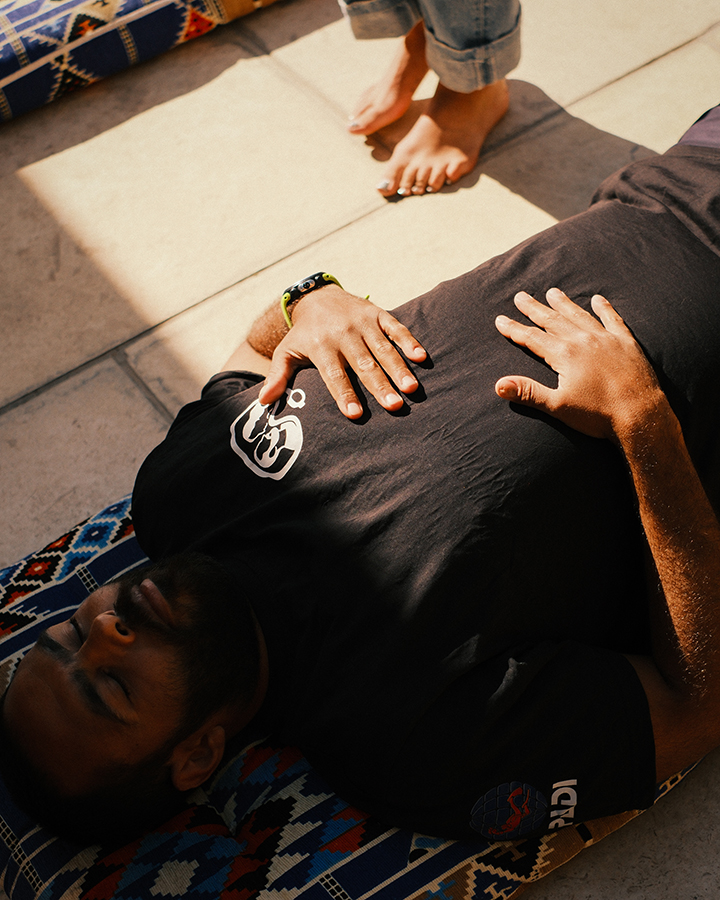 Ready to freedive in Dahab? Get in touch. We’ll tell you everything you need to know about courses, availability and planning your trip.
FAQ
Is Dahab the best place in the world for freediving?
For a combination of training conditions, community, accessibility and year-round viability — yes, it’s consistently ranked among the top two or three globally, alongside places like the Philippines and the Canary Islands. What makes it stand out is the Blue Hole as a dedicated training site and a permanent freediving community that gives the place a different weight from purely tourist destinations.
Do I need to speak Arabic?
No. English is widely spoken in Dahab’s diving community. At Makara we teach in both English and Spanish.
Can I combine a freediving course with scuba diving?
Yes. We offer both at Makara. Many students combine an AIDA 2 with a PADI Advanced, or do scuba fun dives around their freediving sessions. We’ll help you structure the week so the two don’t interfere with each other.
Is freediving safe in Dahab?
With proper training and correct safety protocol — never diving alone — freediving is very safe. All our courses include thorough safety and buddy rescue training from day one.
What's the freediving community like in Dahab?
International, serious about the practice, and generally very welcoming to newcomers. There are always people at various levels diving at the Blue Hole. It’s one of those places where conversations about depth, equalization and technique happen naturally over dinner.